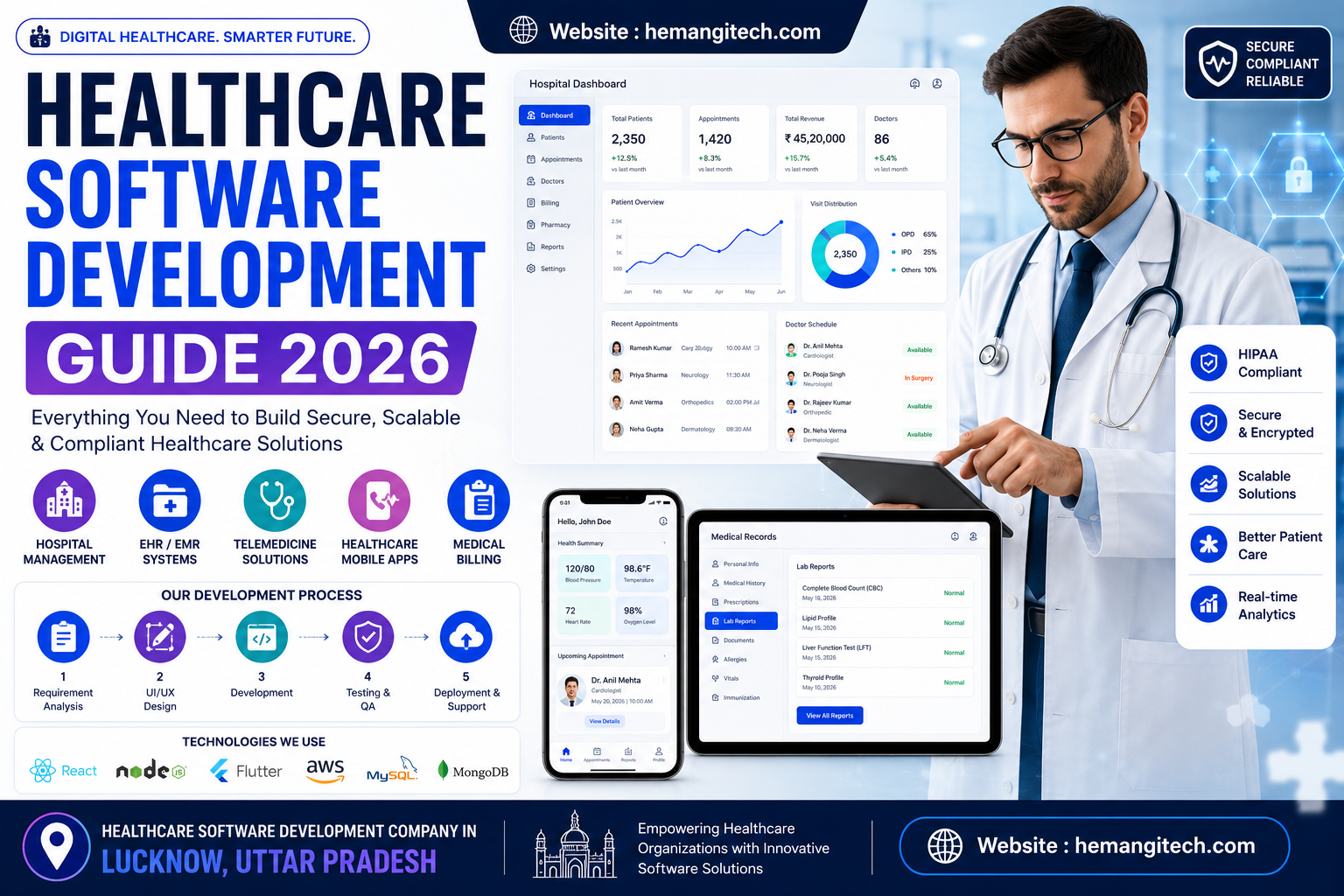
Healthcare Software Development Guide 2026: Everything Businesses Need to Know
The healthcare industry is undergoing a massive digital transformation. Hospitals, clinics, healthcare startups, diagnostic centers, pharmacies, and medical professionals are increasingly investing in healthcare software solutions to improve patient care, streamline operations, and enhance data management.
From telemedicine platforms and electronic health records (EHR) systems to patient portals and AI-powered diagnostics, healthcare software development is shaping the future of modern healthcare.
In this comprehensive healthcare software development guide, we'll explore healthcare software types, development processes, costs, technologies, compliance requirements, and best practices for building secure and scalable healthcare solutions.
What Is Healthcare Software Development?
Healthcare software development refers to the process of designing, developing, testing, and deploying digital solutions specifically for healthcare organizations and medical service providers.
These solutions help healthcare professionals manage patient information, automate workflows, improve communication, and deliver better healthcare services.
Healthcare software may include:
- Hospital Management Systems (HMS)
- Electronic Health Records (EHR)
- Electronic Medical Records (EMR)
- Telemedicine Applications
- Healthcare Mobile Apps
- Pharmacy Management Software
- Medical Billing Systems
- Healthcare CRM Solutions
- Laboratory Management Systems
- Healthcare Analytics Platforms
Why Healthcare Software Development Is Important
The healthcare sector faces numerous challenges, including rising patient expectations, data management complexities, regulatory requirements, and operational inefficiencies.
Healthcare software helps organizations:
- Improve patient care
- Reduce administrative workload
- Increase operational efficiency
- Enhance data accuracy
- Improve patient engagement
- Enable remote healthcare services
- Ensure regulatory compliance
- Support data-driven decision-making
As digital healthcare adoption continues to grow, software solutions are becoming essential for modern healthcare providers.
Types of Healthcare Software Solutions
Hospital Management Software
Hospital management systems centralize operations such as:
- Patient registration
- Appointment scheduling
- Billing and invoicing
- Staff management
- Inventory management
- Medical record management
Electronic Health Records (EHR) Systems
EHR software allows healthcare providers to securely store and manage patient medical histories.
Benefits include:
- Improved patient care
- Faster diagnosis
- Better collaboration
- Reduced paperwork
Telemedicine Applications
Telemedicine software enables virtual healthcare consultations through video conferencing and secure messaging.
Common features include:
- Online appointments
- Video consultations
- E-prescriptions
- Remote patient monitoring
Healthcare Mobile Applications
Healthcare apps help patients:
- Book appointments
- Access medical records
- Track medications
- Monitor health metrics
- Communicate with doctors
Pharmacy Management Software
Pharmacy solutions automate:
- Prescription management
- Inventory tracking
- Billing processes
- Supplier management
Medical Billing Software
Healthcare billing systems streamline:
- Insurance claims
- Payment processing
- Revenue cycle management
- Financial reporting
Key Features of Healthcare Software
Patient Management
Healthcare software should provide comprehensive patient management capabilities.
Features include:
- Patient registration
- Medical history management
- Appointment scheduling
- Prescription tracking
Electronic Medical Records
Secure digital storage of patient information helps improve treatment accuracy and accessibility.
Telehealth Functionality
Virtual consultations have become a critical component of modern healthcare software.
Appointment Scheduling
Online scheduling improves patient convenience and reduces administrative workload.
E-Prescriptions
Doctors can securely generate and share prescriptions electronically.
Analytics and Reporting
Healthcare organizations use analytics to improve operational performance and patient outcomes.
Healthcare Software Development Process
Step 1: Requirement Analysis
Identify:
- Business goals
- User requirements
- Regulatory requirements
- Technical specifications
Step 2: UI/UX Design
Healthcare applications require intuitive and accessible interfaces for patients and healthcare professionals.
Step 3: Software Development
The development phase includes:
- Frontend development
- Backend development
- Database architecture
- API integrations
Step 4: Testing and Quality Assurance
Healthcare software must undergo extensive testing, including:
- Functional testing
- Security testing
- Performance testing
- Compliance validation
Step 5: Deployment and Maintenance
After launch, ongoing monitoring, updates, and support are essential for long-term success.
Technologies Used in Healthcare Software Development
Frontend Technologies
- React.js
- Angular
- Vue.js
Backend Technologies
- Node.js
- Laravel
- Python
- .NET
Mobile Development
- Flutter
- React Native
- Kotlin
- Swift
Cloud Platforms
- AWS
- Microsoft Azure
- Google Cloud
Database Technologies
- PostgreSQL
- MySQL
- MongoDB
Healthcare Software Development Cost
Healthcare software development costs vary depending on project complexity and features.
Basic Healthcare Application
Estimated Cost:
₹8,00,000 – ₹20,00,000
Timeline:
2–4 Months
Mid-Level Healthcare Platform
Estimated Cost:
₹20,00,000 – ₹75,00,000
Timeline:
4–8 Months
Enterprise Healthcare Solution
Estimated Cost:
₹75,00,000 – ₹5 Crore+
Timeline:
8–18 Months
Factors affecting costs include:
- Features and functionality
- Security requirements
- Compliance implementation
- Third-party integrations
- Cloud infrastructure
- Development team expertise
Healthcare Compliance and Security Requirements
Security and compliance are critical in healthcare software development.
Important regulations include:
HIPAA Compliance
Protects patient health information and privacy.
GDPR Compliance
Ensures data protection for users in applicable regions.
HL7 Standards
Supports healthcare data exchange and interoperability.
FHIR Standards
Facilitates secure healthcare information sharing between systems.
Data Security Measures
Healthcare software should include:
- Data encryption
- Multi-factor authentication
- Access controls
- Audit logs
- Secure APIs
Emerging Trends in Healthcare Software Development
Artificial Intelligence (AI)
AI is transforming healthcare through:
- Medical diagnostics
- Predictive analytics
- Personalized treatment plans
Remote Patient Monitoring
Connected devices help providers monitor patients in real time.
Internet of Medical Things (IoMT)
Medical devices can securely exchange healthcare data.
Blockchain in Healthcare
Blockchain improves security, transparency, and medical record management.
Healthcare Chatbots
AI-powered chatbots enhance patient engagement and support.
Why Businesses Choose Healthcare Software Development in India
India has become a global destination for healthcare software development due to:
- Cost-effective development
- Skilled healthcare developers
- Strong technology ecosystem
- Global healthcare expertise
- Modern development practices
Healthcare organizations worldwide partner with Indian software development companies to build scalable healthcare solutions.
Healthcare Software Development Services in Lucknow
Lucknow is rapidly emerging as a technology hub offering high-quality healthcare software development services.
Healthcare providers can partner with a healthcare software development company in Lucknow to build:
- Telemedicine platforms
- EHR and EMR systems
- Hospital management software
- Healthcare mobile apps
- Pharmacy management solutions
- Medical billing software
Businesses benefit from competitive pricing, experienced developers, and personalized project support.
Choosing the Right Healthcare Software Development Company
Before selecting a development partner, consider:
- Healthcare industry experience
- Security expertise
- Compliance knowledge
- Technical capabilities
- Development methodology
- Post-launch support services
An experienced healthcare software development company can help ensure security, compliance, scalability, and long-term success.
Conclusion
Healthcare software development is transforming the healthcare industry by improving patient experiences, streamlining operations, and enabling data-driven decision-making.
Whether you're developing a telemedicine platform, hospital management system, healthcare mobile app, or EHR solution, choosing the right technology partner is essential.
Organizations looking for healthcare software development services in Lucknow can benefit from cost-effective solutions, experienced developers, and modern healthcare technology expertise to build secure and scalable healthcare applications.
Frequently Asked Questions (FAQs)
What is healthcare software development?
Healthcare software development involves creating digital solutions for hospitals, clinics, healthcare providers, and medical organizations to improve operations and patient care.
How much does healthcare software development cost?
Healthcare software development costs typically range from ₹8,00,000 to ₹5 Crore+, depending on project complexity, features, and compliance requirements.
What are the most common healthcare software solutions?
Hospital management systems, EHR software, telemedicine applications, healthcare mobile apps, pharmacy management systems, and medical billing software are among the most popular healthcare solutions.
Why is compliance important in healthcare software?
Compliance helps protect patient data, ensures regulatory adherence, and reduces legal and security risks.
How long does healthcare software development take?
Basic healthcare applications may take 2–4 months, while enterprise healthcare platforms can require 8–18 months or more.
What technologies are used in healthcare software development?
Popular technologies include React.js, Node.js, Flutter, Python, .NET, AWS, Azure, PostgreSQL, and MongoDB.
Why choose a healthcare software development company in Lucknow?
Lucknow-based healthcare software companies offer skilled developers, competitive pricing, personalized support, and expertise in building healthcare technology solutions.
Is healthcare software development a good investment?
Yes. Healthcare software improves efficiency, patient engagement, operational management, and long-term business growth for healthcare organizations.