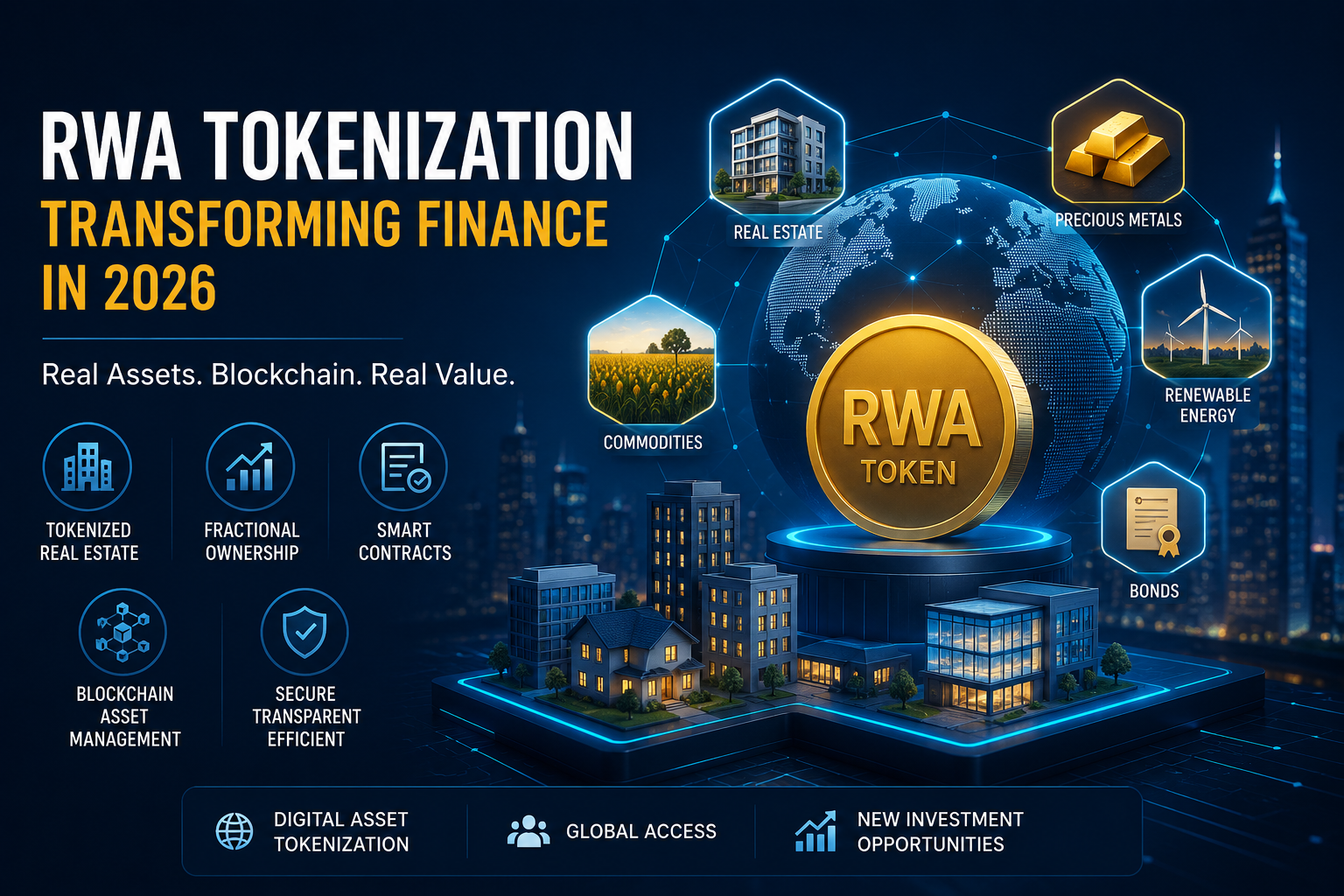
How Real World Asset (RWA) Tokenization is Transforming Finance in 2026
The financial industry is undergoing a massive digital transformation, and one of the most significant innovations driving this change is Real World Asset (RWA) Tokenization. As blockchain technology matures, businesses, investors, and financial institutions are increasingly turning to tokenized assets to unlock liquidity, improve accessibility, and modernize traditional investment markets.
In 2026, RWA tokenization is no longer just a concept—it is rapidly becoming a cornerstone of the future financial ecosystem.
What is Real World Asset (RWA) Tokenization?
Real World Asset Tokenization refers to the process of converting ownership rights of physical or traditional financial assets into digital tokens on a blockchain network.
These assets may include:
-
Real Estate Properties
-
Commercial Buildings
-
Gold and Precious Metals
-
Stocks and Bonds
-
Art and Collectibles
-
Commodities
-
Intellectual Property
-
Infrastructure Projects
-
Private Equity Investments
Each token represents a fractional ownership stake in the underlying asset, allowing investors to buy, sell, and trade ownership digitally.
Why RWA Tokenization is Gaining Momentum in 2026
Traditional investment markets often face challenges such as:
-
High entry barriers
-
Limited liquidity
-
Lengthy settlement processes
-
Complex ownership transfers
-
Geographic restrictions
Blockchain technology solves these problems by creating secure, transparent, and programmable digital ownership records.
As governments and regulatory frameworks continue to evolve, tokenized assets are becoming increasingly attractive to both institutional and retail investors.
Benefits of RWA Tokenization
1. Fractional Ownership
Historically, investing in premium real estate or large-scale assets required significant capital.
With tokenization, a property worth $10 million can be divided into thousands of digital tokens, enabling investors to participate with much smaller investments.
This democratizes access to wealth-building opportunities.
2. Enhanced Liquidity
Traditional assets such as real estate are often illiquid.
Tokenized assets can be traded on digital marketplaces, allowing investors to buy and sell ownership stakes more efficiently.
Improved liquidity helps unlock capital and creates more dynamic markets.
3. Global Accessibility
Blockchain removes geographical barriers.
Investors from different parts of the world can participate in tokenized investment opportunities without the complexities associated with traditional cross-border transactions.
4. Faster Settlements
Traditional asset transfers may take days or even weeks.
Blockchain-enabled tokenization enables near-instant settlement while reducing administrative costs and intermediaries.
5. Increased Transparency
Every transaction is recorded on an immutable blockchain ledger.
This transparency reduces fraud risks and increases investor confidence.
Tokenized Real Estate: The Leading RWA Use Case
Among all tokenized asset classes, tokenized real estate has emerged as the most promising application.
Real estate developers can:
-
Raise capital faster
-
Reach global investors
-
Improve liquidity
-
Reduce transaction costs
-
Enable fractional ownership
Investors gain access to premium real estate opportunities without purchasing an entire property.
As a result, tokenized real estate platforms are experiencing significant growth worldwide.
How Blockchain Powers Asset Tokenization
Blockchain serves as the foundational technology behind asset tokenization.
The process typically involves:
Asset Verification
The ownership and valuation of the asset are verified through legal and financial due diligence.
Token Creation
Digital tokens representing ownership stakes are created using smart contracts.
Compliance Integration
KYC, AML, and regulatory requirements are integrated into the tokenization platform.
Investor Participation
Investors purchase tokens using fiat currency or approved digital assets.
Secondary Market Trading
Tokens can be traded on compliant exchanges or asset tokenization platforms.
Industries Being Disrupted by RWA Tokenization
Real Estate
Commercial and residential properties.
Finance
Private credit, bonds, and structured financial products.
Commodities
Gold, silver, oil, and agricultural products.
Art and Collectibles
Luxury artwork, rare collectibles, and digital ownership certificates.
Infrastructure
Energy projects, transportation systems, and large-scale developments.
Regulatory Developments Supporting Tokenization
Governments and regulators are increasingly recognizing the potential of blockchain-based asset ownership.
Several jurisdictions are introducing frameworks that support:
-
Digital securities
-
Tokenized investment products
-
Blockchain-based ownership records
-
Smart contract enforcement
These developments are creating a more secure environment for institutional adoption.
Challenges Facing Asset Tokenization
Despite its growth, several challenges remain:
Regulatory Complexity
Different countries maintain different regulations regarding digital assets.
Technology Adoption
Traditional institutions may require significant infrastructure upgrades.
Market Education
Many investors are still unfamiliar with blockchain-based ownership models.
Security Considerations
Robust smart contract auditing and cybersecurity measures remain essential.
Future of RWA Tokenization
Industry analysts predict that tokenized assets could represent trillions of dollars in value over the coming decade.
As blockchain infrastructure improves and regulations mature, tokenization will likely become a standard method for representing ownership across multiple industries.
The combination of transparency, liquidity, accessibility, and automation positions RWA tokenization as one of the most transformative financial innovations of the digital era.
Why Businesses Should Invest in Asset Tokenization Now
Organizations that adopt tokenization early can gain significant competitive advantages, including:
-
New fundraising opportunities
-
Global investor access
-
Increased asset liquidity
-
Enhanced operational efficiency
-
Reduced transaction costs
Companies across finance, real estate, healthcare, and infrastructure sectors are already exploring blockchain-powered tokenization solutions.
Conclusion
Real World Asset Tokenization is redefining how ownership, investment, and value transfer operate in the modern economy. By bringing physical assets onto blockchain networks, businesses and investors can unlock unprecedented levels of liquidity, accessibility, and transparency.
As adoption accelerates throughout 2026 and beyond, tokenized assets are expected to play a central role in the future of global finance. Organizations that embrace this transformation today will be better positioned to capitalize on the next generation of digital investment opportunities.
At Hemangi Next Gen Tech India Pvt Ltd, we help businesses build secure blockchain solutions, asset tokenization platforms, smart contracts, and next-generation digital ecosystems designed for the future of finance.