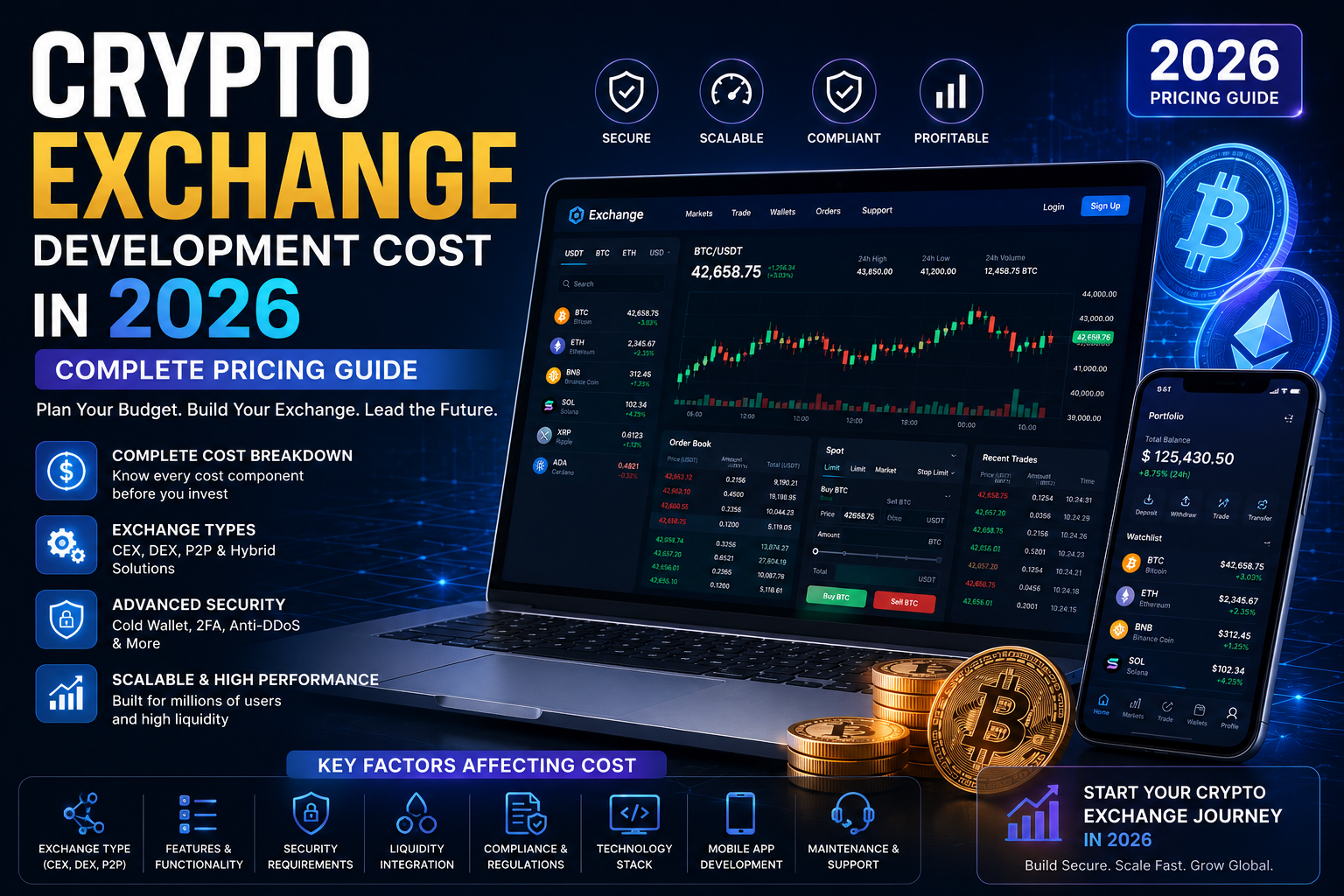
Crypto Exchange Development Cost in 2026 (Complete Pricing Guide)
The cryptocurrency industry continues to evolve rapidly, with millions of users worldwide trading digital assets daily. As blockchain adoption grows, entrepreneurs and businesses are increasingly interested in launching their own cryptocurrency exchange platforms. One of the most common questions business owners ask is: "How much does crypto exchange development cost in 2026?"
The answer depends on several factors, including platform type, features, security requirements, compliance obligations, scalability needs, and development approach.
This guide provides a detailed breakdown of crypto exchange development costs and the factors influencing your investment.
What is a Cryptocurrency Exchange?
A cryptocurrency exchange is a platform that allows users to buy, sell, and trade digital assets such as Bitcoin, Ethereum, USDT, and other cryptocurrencies.
Popular exchange types include:
- Centralized Exchanges (CEX)
- Decentralized Exchanges (DEX)
- Hybrid Exchanges
- Peer-to-Peer (P2P) Exchanges
- Derivatives Trading Platforms
Each type has different development costs and technical requirements.
Average Crypto Exchange Development Cost in 2026
Estimated pricing ranges:
- Basic Crypto Exchange: ₹10,00,000 – ₹30,00,000
- Mid-Level Exchange Platform: ₹30,00,000 – ₹1 Crore
- Enterprise Crypto Exchange: ₹1 Crore – ₹10 Crore+
- Global Multi-Currency Exchange: ₹5 Crore – ₹50 Crore+
The final cost depends on features, security, compliance, liquidity integration, and infrastructure requirements.
Factors Affecting Crypto Exchange Development Cost
1. Exchange Type
The type of exchange significantly impacts development costs.
Centralized Exchange (CEX)
Features include:
- User Registration
- KYC Verification
- Order Matching Engine
- Wallet Management
- Admin Dashboard
Estimated Cost:
₹25,00,000 – ₹5 Crore+
Decentralized Exchange (DEX)
Features include:
- Smart Contracts
- Wallet Connectivity
- Non-Custodial Trading
- On-Chain Transactions
Estimated Cost:
₹20,00,000 – ₹3 Crore+
Peer-to-Peer Exchange (P2P)
Features include:
- Buyer-Seller Matching
- Escrow Systems
- Dispute Management
- Payment Integrations
Estimated Cost:
₹15,00,000 – ₹2 Crore+
Core Features Required for a Crypto Exchange
User Management
- Registration & Login
- KYC Verification
- Two-Factor Authentication
- Profile Management
Trading Engine
The matching engine is the heart of a cryptocurrency exchange.
Functions include:
- Market Orders
- Limit Orders
- Order Book Management
- Trade Execution
Wallet Integration
Supported assets may include:
- Bitcoin
- Ethereum
- USDT
- BNB
- Solana
- Other cryptocurrencies
Wallet security directly impacts development costs.
Security Features
Security is one of the most important investments for any crypto exchange.
Essential features include:
- Multi-Factor Authentication
- DDoS Protection
- Cold Wallet Storage
- Hot Wallet Security
- Anti-Phishing Protection
- Withdrawal Controls
- Security Monitoring
Strong security measures significantly increase development costs but reduce operational risks.
Liquidity Integration Cost
Without liquidity, users cannot trade efficiently.
Options include:
- Internal Liquidity
- Liquidity Providers
- Exchange API Integrations
- Market Maker Services
Estimated Cost:
₹5,00,000 – ₹50,00,000+
Compliance and Regulatory Costs
Operating a cryptocurrency exchange requires compliance with local regulations.
Potential requirements include:
- KYC Procedures
- AML Policies
- Risk Assessment Frameworks
- Compliance Documentation
- Legal Consultation
- FIU Registration (where applicable)
Mobile App Development Cost
Most exchanges require dedicated mobile applications.
Estimated Cost:
- Android App: ₹5,00,000 – ₹25,00,000
- iOS App: ₹5,00,000 – ₹25,00,000
- Cross-Platform App: ₹8,00,000 – ₹35,00,000
A seamless mobile trading experience is essential for user growth.
Technology Stack Used in Crypto Exchange Development
Popular technologies include:
- React.js
- Next.js
- Node.js
- PHP
- Laravel
- PostgreSQL
- Redis
- Docker
- Kubernetes
- Blockchain APIs
Technology choices affect scalability, performance, and development costs.
Custom Exchange Development
Advantages:
- Complete Ownership
- Custom Features
- Better Scalability
- Unique Branding
Estimated Cost:
₹30,00,000 – ₹10 Crore+
Ongoing Maintenance Costs
After launch, exchanges require continuous maintenance.
Recurring costs include:
- Cloud Hosting
- Security Monitoring
- Software Updates
- Customer Support
- Liquidity Management
- Compliance Management
Annual maintenance can range from ₹5,00,000 to several crores depending on platform scale.
How to Reduce Development Costs
Businesses can reduce costs by:
- Launching an MVP First
- Using Cross-Platform Mobile Development
- Prioritizing Essential Features
- Selecting Scalable Architecture
- Partnering with Experienced Blockchain Developers
A phased development approach often provides the best return on investment.
Why Businesses Invest in Crypto Exchanges
Benefits include:
- Trading Fee Revenue
- Listing Fee Revenue
- Staking Services
- Token Launch Opportunities
- Global Market Reach
- Growing Crypto Adoption
As digital asset adoption continues increasing, crypto exchanges remain one of the most promising blockchain business models.
Conclusion
Crypto exchange development cost in 2026 varies significantly depending on platform type, features, security requirements, liquidity management, and compliance obligations.
While a basic exchange may require a modest investment, enterprise-grade platforms serving global users demand advanced infrastructure, security, and scalability. Businesses should prioritize security, regulatory readiness, and user experience when planning a cryptocurrency exchange project.
A properly developed exchange platform can become a highly scalable and profitable digital asset business in the rapidly growing blockchain ecosystem.
FAQ Section
Q1. How much does it cost to develop a crypto exchange in 2026?
Crypto exchange development costs typically range from ₹10,00,000 to ₹10 Crore+ depending on features, security, and platform complexity.
Q2. Which is cheaper: White Label or Custom Crypto Exchange?
White-label exchanges are generally cheaper and faster to launch, while custom exchanges offer greater flexibility and ownership.
Q3. What is the most expensive component of a crypto exchange?
Security infrastructure, trading engine development, liquidity integration, and compliance requirements are usually the most expensive components.
Q4. How long does it take to build a crypto exchange?
A basic exchange can take 3–6 months, while enterprise-grade platforms may require 6–18 months or more.
Q5. Can a crypto exchange be developed with a mobile app?
Yes. Most modern exchanges include Android and iOS applications to provide users with a seamless trading experience.
Compliance costs vary by jurisdiction and business model.
How Real World Asset (RWA) Tokenization is Transforming Finance in 2026